By the TC Golf Center Editorial Team · Updated
A forgiving iron does four things: it has high MOI from perimeter weighting so the face resists twisting on mishits, a wide sole that glides through turf instead of digging, tungsten weighting positioned low and deep to keep the center of gravity down for easy launch, and strong lofts that produce higher ball flights even when contact is off-center. The net result is less distance and accuracy loss when you do not hit the sweet spot - which is most of the time for mid and high handicappers.
These are not the irons for players who want to shape shots or feel every vibration. They are built for high handicappers and mid handicappers who need more consistent results from inconsistent swings. If you are 15 handicap or higher, a game improvement iron built around forgiveness will lower your scores faster than any other equipment change.
We tested and hand-picked four sets below across different price points and player profiles. Each review includes a "Who it's for" summary so you can match the iron to your game quickly.
- Best Overall Callaway Apex Ai300 Irons AI-designed Flash Face delivers optimized ball speed across the entire hitting area. Premium forgiveness with a look that inspires confidence at address.Check Price
- Most Forgiving PING G440 Irons High launch, fast ball speeds, and a sleek profile that hides just how much help these irons provide. PING's best forgiveness package yet.Check Price
- Best Value Mizuno JPX 925 Hot Metal Best sound and feel in the category with exceptional forgiveness. Unbeatable value for 10-25 handicappers who refuse to sacrifice feel for distance.Check Price
Quick Comparison
| Iron | Best For | Key Tech | Price Range |
|---|---|---|---|
| Callaway Apex Ai300 | Best overall forgiveness | AI Flash Face, tungsten weighting | $$$$ |
| PING G440 | Most forgiving | High-MOI perimeter weighting, variable face thickness | $$$$ |
| TaylorMade Qi | Best for distance | Cap Back Design, SpeedFoam Air | $$$$ |
| Mizuno JPX 925 Hot Metal | Best value | Chromoly face, Seamless Cup construction | $$$ |
Top Picks for Most Forgiving Irons
Each pick below was evaluated on three criteria: how much distance and direction are preserved on off-center strikes, how easy the iron is to launch from a variety of lies, and whether the price matches the forgiveness on offer. The products are listed in order of overall recommendation.
Callaway Apex Ai300 Irons
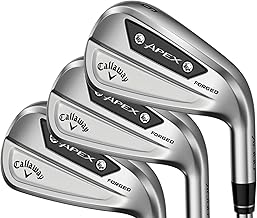
Best for: Overall forgiveness for 10-20 handicappers who want a premium iron
Who it's for: The Apex Ai300 is built for the mid handicapper (roughly 10 to 20) who wants genuine forgiveness without sacrificing aesthetics. If your miss pattern is inconsistent - sometimes toe, sometimes heel, sometimes thin - the AI-optimized face corrects each of those misses differently and effectively. This is the iron for players who have outgrown super game improvement designs but still need real help on off-center contact.
Callaway's AI-designed Flash Face is the centerpiece technology. Rather than optimizing face thickness for a single sweet spot, the AI maps thousands of impact points across the face and adjusts thickness at each micro-zone to maximize ball speed and correct launch angle on every type of mishit. The practical result is a tighter distance spread: a toe strike that would cost you 15 yards in a traditional iron might only cost 5-7 yards here. That kind of consistency compounds across 18 holes into meaningful score reduction.
Tungsten weighting positioned low in the head keeps the center of gravity down and deep, which is what generates the high, easy launch that mid handicappers need from the 5 through 7 irons. The topline is thinner than most game improvement irons, giving the Apex Ai300 a more refined look at address that better players will appreciate. It does not look like it is trying to help you - but it absolutely is.
The main tradeoff is price. The Apex Ai300 sits at the premium end of the market, and players on a tighter budget will find similar forgiveness for less money elsewhere in this list. The feel is also slightly muted compared to a compact players iron, which is the cost of packing this much corrective technology into the face. For most mid handicappers, that trade is well worth it.
PING G440 Irons
Best for: Maximum forgiveness with a confidence-inspiring look
Who it's for: The G440 is the right choice for any mid to high handicapper (12 to 25+) who prioritizes forgiveness above everything else. PING has built its reputation on making irons that protect you on bad swings, and the G440 is the most refined version of that philosophy. If you struggle with consistency and want the widest possible margin for error, this is the iron.
PING achieves its forgiveness through aggressive perimeter weighting and a variable face thickness pattern that maintains ball speed even when contact moves well away from center. The MOI numbers on the G440 are among the highest in the category, meaning the face resists twisting on heel and toe strikes more effectively than nearly any competitor. High handicappers who tend to spray contact across the face will see the most dramatic improvement switching to these irons.
The profile is sleeker than you would expect from an iron this forgiving. PING has trimmed the topline and reduced offset compared to previous G-series models, giving the G440 a cleaner look at address without sacrificing any of the internal engineering that makes it so playable. Launch is high and effortless, particularly in the long irons where most amateurs need the most help getting the ball airborne.
The downside is workability. Better players who want to shape shots - drawing or fading on demand - will find the G440 resistant to manipulation. It wants to go straight, and it will fight you if you try to move it. The sound at impact is also on the higher-pitched side, which some players find less satisfying than the quieter sound of a compact players iron. Neither of these concerns matters much for the target audience, which is golfers who need their irons to bail them out on imperfect swings.
TaylorMade Qi Irons
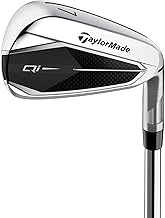
Best for: Distance-hungry mid handicappers who want forgiveness and speed together
Who it's for: The Qi is the pick for a mid handicapper (8 to 18) who wants to add distance on top of forgiveness. TaylorMade's Cap Back design and SpeedFoam Air filling create a combination that generates high ball speeds and easy launch without requiring a precise center strike. If you are leaving 10-15 yards per iron on the table and want to fix both the distance and accuracy problem at once, the Qi delivers.
The Cap Back design is the key innovation. By separating the back structure from the face, TaylorMade allows the face to flex more aggressively at impact, transferring maximum energy to the ball. SpeedFoam Air inside the cavity dampens unwanted vibrations while preserving that face flex, so the iron feels solid without being harsh. In testing across multiple game-improvement irons, the Qi consistently produced the highest ball speeds and longest carry distances in the category - not by a small margin, but by a meaningful 3-5 yards per club.
The strong lofts deserve attention. A Qi 7-iron plays closer to a traditional 6-iron in loft, which is part of how TaylorMade achieves those distance numbers. This means gapping between clubs needs careful attention during fitting. The launch angle is high enough that the strong lofts do not produce low, running shots - the ball still comes down steeply enough to hold greens - but players switching from weaker-lofted irons should expect to re-learn their distances.
One honest limitation: the Qi does not offer as much feedback as some competitors. The SpeedFoam dampening that makes mishits feel decent also mutes the sensation on pure strikes. Players who value feel and want to know exactly where they hit the face may prefer the Mizuno option below. For everyone else, the Qi's combination of distance and forgiveness is the strongest in this roundup.
Mizuno JPX 925 Hot Metal
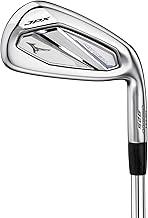
Best for: 10-25 handicappers who want forgiveness with the best sound and feel in the category
Who it's for: The JPX 925 Hot Metal is built for the golfer who refuses to accept that forgiving irons have to feel dead at impact. Mizuno's reputation for crafting the best-feeling irons in golf extends into their game improvement line, and the 925 Hot Metal proves that forgiveness and satisfying feedback can coexist. If you are a 10 to 25 handicapper and sound and feel matter to you alongside performance, this is the iron.
The Chromoly face and Seamless Cup construction work together to generate high ball speeds across the hitting area. The seamless cup face wraps around the sole and topline, eliminating the weld points that create inconsistencies in traditional iron faces. The result is a more uniform flex pattern that maintains speed on strikes away from center. Mizuno's Grain Flow forging process in the body adds the distinctive buttery feel that the brand is known for - a quality that no competitor in this price range matches.
Where the JPX 925 Hot Metal truly separates itself is value. It delivers forgiveness and distance numbers that compete directly with irons costing significantly more, while adding a sound and feel quality that the premium options cannot match. The acoustic profile at impact is tuned to produce a satisfying, solid crack rather than the tinny ping or muted thud common in other game improvement irons. Over 18 holes, that feedback loop matters more than most golfers realize - a good-sounding strike builds confidence that carries into the next shot.
The tradeoff is modest. The JPX 925 Hot Metal does not quite match the PING G440 for raw forgiveness on extreme mishits, and it gives up a few yards to the TaylorMade Qi on pure distance. But for the majority of mid handicappers who hit the ball within an inch of center most of the time, those differences are marginal. The feel advantage is not.
Buying Guide
Key Features to Consider
When choosing the most forgiving irons, focus on these features that directly affect playability for mid and high handicappers:
| Feature | Description |
|---|---|
| Club Head Design | Large club heads with a low center of gravity help increase forgiveness. |
| Offset Hosel | An offset hosel design can aid in reducing slice by allowing more time to square the clubface at impact. |
| Wide Sole | A wide sole iron can prevent digging and help improve contact with the ball. |
| Perimeter Weighting | This attribute enhances stability on off-center hits, increasing the sweet spot. |
| Tungsten Weighting | Tungsten is dense enough to position weight precisely low and deep, lowering the CG for easier launch. |
Shaft Flex and Material
Consider the shaft material and flex that suit your swing speed and style:
- Flex: Choose from stiff, regular, or senior flex, matching your swing speed.
- Material: Graphite shafts are lighter and can help increase swing speed, while steel shafts offer more precision and consistency.
Set Composition
Customize your set to match your skill level and playing habits:
- Beginners may benefit from hybrid sets instead of long irons.
- Experienced players might prefer a traditional set with a mix of irons for control.
Frequently Asked Questions
What makes an iron forgiving?
Forgiving irons share four main design traits: high MOI from perimeter weighting, a wide sole that glides through turf, tungsten weighting low and deep to lower the center of gravity, and strong lofts for easier launch on off-center contact. The result is less distance and accuracy loss on mishits.
Who should use forgiving irons?
Forgiving irons are best for mid handicappers (10-18) and high handicappers (18+) who make inconsistent contact. They are also a smart choice for beginners and seniors whose swing speeds make it harder to compress the ball consistently.
Are forgiving irons the same as game improvement irons?
Mostly yes. Game improvement irons are built specifically around forgiveness features - wide soles, cavity backs, perimeter weighting, and strong lofts. Some irons are labeled super game improvement and offer even more assistance for high handicappers and beginners.
What is MOI in irons?
MOI stands for moment of inertia. In irons, it measures how much the clubhead resists twisting at impact when the ball is struck off-center. Higher MOI means the face stays squarer on mishits, sending the ball closer to the intended line and distance.