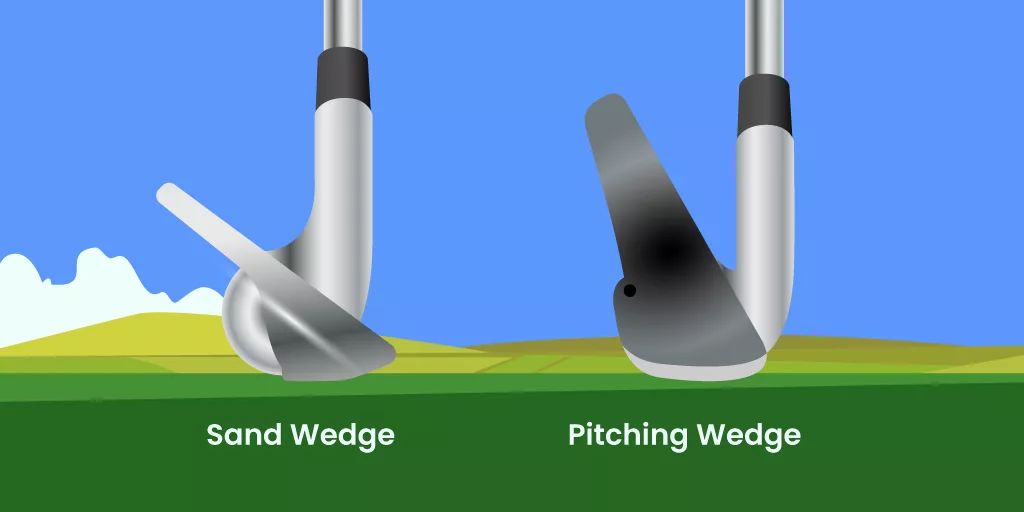
Wedges are workhorses in the short game. Knowing the difference between a sand wedge and a pitching wedge, and when to reach for each one, saves you strokes around the green.
Understanding Sand Wedges
Sand Wedge Definition
A sand wedge is a type of golf club designed specifically for playing out of sand bunkers. It is typically heavier and has a flatter sole and more loft than a pitching wedge.
Purpose of a Sand Wedge
The purpose of a sand wedge is to help golfers get their ball out of the sand and onto the green, allowing them to make a shot with more accuracy and control.
SW Characteristics
A sand wedge typically has a loft of 56 to 60 degrees, making it the highest-lofted club in a golfer's bag. It also has a wider sole and more bounce, which helps the club glide through the sand and avoid digging in.
Ideal Situations for Using a Sand Wedge
A sand wedge is ideal for bunker shots and for getting the ball up out of rough or other tough lies around the green. The high loft and wide sole do the heavy lifting.
Selecting a Sand Wedge
Consider these factors for the ideal sand wedge:
- Loft: Choose 54-58 degrees for most situations; higher lofts for steeper swings or deep bunkers.
- Bounce: Match your swing type and course conditions; higher bounce (10-16 degrees) for steep swings/soft sand, lower bounce (4-10 degrees) for shallow swings/firm sand.
- Grind: Pick one that suits your swing and preferred shots.
- Sole Width: Wider soles for bunker play and forgiveness; narrower soles for versatility.
- Feel and Feedback: Test wedges for comfort and shot precision.
- Shaft: Match flex and material to your swing and style.
- Brand and Price: Choose a reliable brand, but balance budget with features.
Understanding Pitching Wedges
Pitching Wedge Definition
A pitching wedge is a type of golf club with a relatively high loft, typically between 44 and 48 degrees. It is designed for precise, high-trajectory shots, typically from a relatively short distance from the green.
Purpose of a Pitching Wedge
The purpose of a pitching wedge is to provide golfers with a club that they can use to execute short, accurate shots around the green. This includes approach shots, chips, and pitches.
PW Characteristics
Pitching wedges typically have a more rounded leading edge and a narrower sole than other wedges, allowing for greater control and precision on short shots.
Ideal Situations for Using a Pitching Wedge
A pitching wedge is ideal for shots from a relatively short distance from the green, where accuracy and control are more important than distance.
Selecting a Pitching Wedge
Consider these factors for the right pitching wedge:
- Loft: Choose 44-48 degrees; higher loft for softer landings, lower loft for more control.
- Bounce: Match your swing type and course conditions.
- Feel and Feedback: Test wedges for comfort and shot precision.
- Shaft: Match flex and material to your swing and style.
How to Choose Between a Sand Wedge and Pitching Wedge
Factors to Consider
Three main factors determine which wedge to reach for: skill level, course conditions, and personal preference.
- Player's Skill Level: A more skilled player may prefer a sand wedge, which offers more versatility and control, while a less skilled player may prefer a pitching wedge, which is more forgiving and easier to hit.
- Course Conditions: If the course has a lot of bunkers or rough, a sand wedge may be a better choice, while a course with well-manicured greens may require a pitching wedge.
- Personal Preference: Some golfers prefer the versatility of a sand wedge, while others prefer the forgiveness of a pitching wedge. Try both and go with whatever feels right for your game.
The Bottom Line
Sand wedge = bunkers and tough lies. Pitching wedge = precision approach shots. Carry both. If you can only start with one, grab the pitching wedge first and add the sand wedge as your short game develops.